Blackberry NFC Juice
Single-strength blackberry juice with deep purple-red color and characteristic sweet-tart berry flavor for beverages, fermentation, dairy, frozen desserts, sauces and foodservice manufacturing.
Rich dark-berry character in a single-strength juice format.
Blackberries belong to the Rubus genus and are aggregate fruits made up of many small drupelets surrounding a central receptacle. Ripe fruit typically develops a deep purple-black appearance, juicy texture and flavor ranging from sweet and ripe to distinctly tart.
NFC blackberry juice is produced from ripe fruit without first concentrating the juice through evaporation and then reconstituting it with water. Depending on the processor, commercial juice may be supplied filtered for a cleaner appearance or non-filtered to retain more suspended fruit solids.
- Produced from ripe blackberries
- Single-strength not-from-concentrate juice
- Deep purple-red natural berry appearance
- Sweet-tart flavor with characteristic blackberry aroma
- Filtered and non-filtered programs may be available
- Conventional and certified organic options may be available
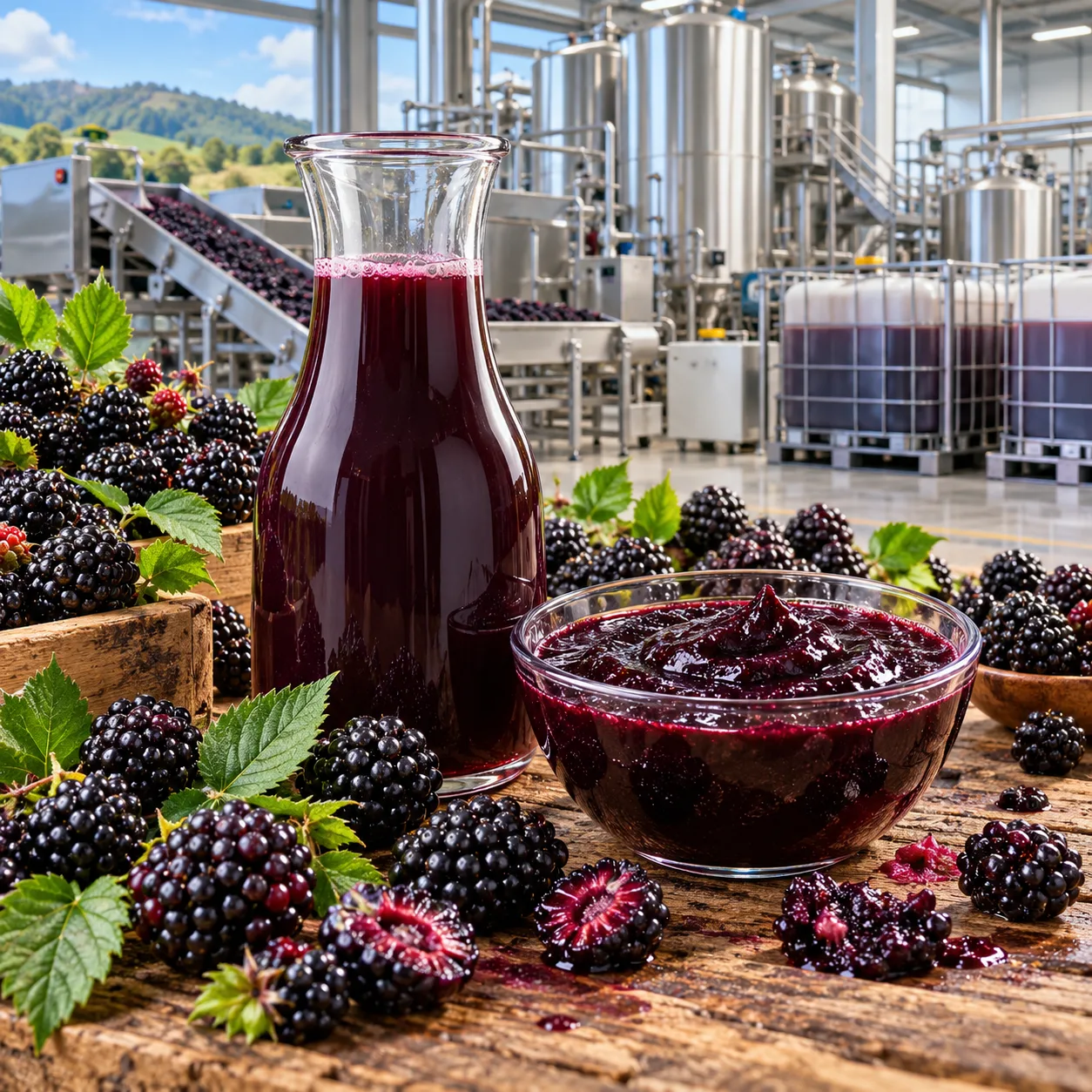
Variety and maturity shape sweetness, acidity and berry intensity.
Flavor & Aroma
Ripe blackberries can provide a rich, dark-fruit flavor with noticeable sweetness, fresh berry aroma and balancing acidity. Different cultivars and growing regions can produce profiles ranging from bright and tart to deeper and more jam-like.
Blackberry's stronger flavor allows it to remain recognizable when blended with apple, grape, pear or other comparatively neutral juices.
Color & Fruit Solids
Blackberry skin and juice contribute a characteristic dark reddish-purple appearance. Extraction, filtration, heat treatment and storage can all influence the final color.
Non-filtered juice retains more suspended fruit material, while filtered juice provides a cleaner appearance and typically lower insoluble-solids content.
Blackberry is an agricultural ingredient. Crop year, cultivar, maturity and origin can affect Brix, acidity, pH and color, so industrial purchasing should use agreed specification ranges and representative samples.
Key specifications for commercial blackberry NFC juice.
Commercial NFC specifications differ according to crop and whether the juice is filtered or non-filtered. Current supplier specifications and lot-specific Certificates of Analysis should always determine acceptance.
Analytical & Sensory Parameters
- Direct soluble solids measured as °Brix
- pH and titratable acidity
- Dark purple-red characteristic color
- Typical blackberry aroma and flavor
- Filtered or non-filtered juice style
- Insoluble-solids level where applicable
- No fermented, metallic or objectionable off-notes
Published Commercial Examples
One frozen NFC blackberry specification lists 8 °Brix minimum, pH 3.0–4.0 and titratable acidity of approximately 0.05–1.5% by weight as citric acid.
A non-filtered pasteurized NFC specification lists 10 ±1.5 °Brix, pH 2.8–3.5, acidity of approximately 0.54–1.48% and insoluble solids of approximately 0.30–4.5%.
The 10 °Brix U.S. regulatory value is a single-strength reference used for juice-percentage calculations. Direct-pressed NFC juice can vary naturally above or below that value depending on crop and processing.
Filtered and non-filtered blackberry NFC serve different applications.
Filtered Blackberry NFC
More highly filtered juice contains fewer suspended berry solids and may be preferred in beverages where clean appearance, lower sediment and predictable pumping are important.
Filtration level should be specified when visual clarity or process equipment has a defined solids tolerance.
Non-Filtered Blackberry NFC
Non-filtered juice retains more natural insoluble fruit material and can provide greater body and whole-fruit character in smoothies, fermented beverages and other applications where some turbidity is acceptable.
Published commercial non-filtered specifications may define a measurable insoluble-solids range to improve batch consistency.
Choose the format according to fruit-solids needs and logistics.
Blackberry NFC Juice
NFC remains near the fruit's natural single-strength soluble solids and avoids the normal concentration-and-reconstitution step.
It can suit premium beverages and projects where not-from-concentrate processing is an important part of the product specification.
Blackberry Juice Concentrate
Blackberry concentrate is commonly available around 65 °Brix, meaning substantial water has been removed. This dramatically improves freight and storage efficiency.
Commercial 65 °Brix concentrate is commonly reconstituted toward approximately 10 °Brix single strength, but NFC and reconstituted concentrate remain different commercial formats.
Where blackberry NFC juice is used commercially.
Juice Drinks & Beverage Blends
Blackberry NFC can provide dark berry flavor, acidity and purple-red color in premium juices, lemonades, fruit drinks and multi-fruit blends.
Apple, grape and pear juices can serve as supporting bases where a lighter or more economical blend is desired.
Smoothies & Functional Beverages
Filtered or non-filtered blackberry NFC can be used in smoothies, fruit-forward nutrition drinks and functional beverage formulations.
Non-filtered juice is particularly useful where some berry body and natural turbidity are acceptable.
Beer & Craft Brewing
Blackberry juice is used in fruit beers, sour beers and specialty brewing applications to introduce fermentable fruit sugars, berry aroma, acidity and color.
Addition timing should be tested because fermentation and processing can materially change fresh berry aroma.
Cider, Wine, Mead & Kombucha
NFC blackberry juice can be used in hard cider, fruit wine, mead, kombucha and other fermented beverages where pronounced dark-berry identity is required.
Brix, acidity and expected fermentation attenuation should be reviewed together when determining dosage.
Drinking Yogurt & Dairy Beverages
Blackberry juice can provide berry flavor and color in drinking yogurt, cultured dairy beverages and selected plant-based products.
Natural acidity should be considered when designing protein-sensitive systems or products subjected to heat treatment.
Frozen Desserts
Blackberry NFC is suitable for sorbet, ice pops, frozen beverages, frozen yogurt and selected ice cream applications where dark-fruit flavor and tartness are desirable.
Juice sugars and solids should be included when calculating finished total solids and freezing behavior.
Sauces, Syrups & Glazes
Blackberry juice works in dessert sauces, syrups, glazes, vinaigrettes, reductions and selected savory sauces.
It pairs especially well with lemon, vanilla, chocolate, maple, warm spices and balsamic-style flavor systems.
Cocktails, Mocktails & Foodservice
Applications include cocktail mixers, mocktail bases, beverage syrups, seasonal drinks and culinary preparations for restaurants, hotels and central kitchens.
Smaller pail or bag-in-box formats can help reduce product waste where industrial drums would be too large for normal batch usage.
Frozen and aseptic programs support different production needs.
Frozen Pails
Commercial frozen blackberry NFC programs include approximately 4.5–5 gallon plastic pails. These formats can suit pilot production, foodservice and smaller manufacturing batches.
Frozen Drums
Industrial frozen NFC blackberry juice is commonly available in approximately 45-gallon lined steel drums for larger production runs.
Aseptic Bag-in-Box & Drums
Aseptic blackberry NFC is also commercially supplied in bag-in-box and aseptic drum formats. Larger totes or bulk systems may be available depending on processor and annual volume.
Published frozen blackberry NFC programs recommend storage around 0°F / -18°C or below and may provide approximately 36 months unopened shelf life under specified frozen conditions. Always follow the exact supplier's storage, thawing and post-opening instructions.
Define juice style and crop tolerances before comparing offers.
Technical Requirements
- Confirm true not-from-concentrate processing
- Required Brix or acceptable crop variation
- pH and titratable acidity
- Filtered or non-filtered juice
- Insoluble-solids or turbidity limits
- Color and sensory expectations
- Microbiological acceptance criteria
- Additive and preservative restrictions
Commercial Requirements
- Conventional or certified organic grade
- Preferred berry origin or cultivar if required
- Trial quantity and forecast annual demand
- Pail, bag-in-box, drum or tote preference
- Frozen, refrigerated or aseptic receiving capability
- Country-of-origin requirements
- Delivery destination and required timing
- Certification and documentation requirements
Compare NFC offers using delivered cost, usable juice volume, Brix, juice style and storage requirements. NFC contains substantially more natural water than concentrate, so price per pound alone can be misleading.
Documents commonly reviewed during supplier approval.
Technical Documentation
- Current product specification
- Lot-specific Certificate of Analysis
- Microbiological specification
- Complete ingredient declaration
- Storage and shelf-life information
- Packaging specification
- Processing and handling instructions
Certification & Supply Documents
- Organic certificate when applicable
- Food-safety certification information
- Kosher or other requested certification
- Country-of-origin documentation
- Traceability and lot identification
- Regulatory and allergen statements
- Commercial quotation and delivery terms
Explore formulation and sourcing considerations.
Blackberry NFC juice sourcing questions
What is blackberry NFC juice?
NFC means not from concentrate. Blackberry NFC juice is produced at single strength from ripe blackberries without first concentrating the juice and subsequently adding water back.
What is the typical Brix?
Published commercial programs range from an 8 °Brix minimum to approximately 10 ±1.5 °Brix depending on crop and juice style. U.S. regulations use 10 °Brix as the single-strength reference for blackberry juice.
What are typical pH and acidity values?
Current published NFC specifications show pH approximately 2.8–4.0. Titratable acidity varies broadly with crop, with commercial references ranging from about 0.05% to 1.5% as citric acid.
What is the difference between filtered and non-filtered juice?
Filtered blackberry juice contains fewer suspended solids and provides a cleaner appearance. Non-filtered NFC retains more natural insoluble fruit material and can provide greater body and turbidity.
What is bulk blackberry NFC juice used for?
Major applications include premium juice beverages, smoothies, functional drinks, beer, cider, kombucha, fruit wine, mead, drinking yogurt, frozen desserts, sauces, syrups, cocktails, mocktails and foodservice products.
How does NFC differ from blackberry concentrate?
NFC remains near natural single-strength solids. Blackberry juice concentrate has substantial water removed and is commonly supplied around 65 °Brix, making it much more efficient for transportation and storage.
Is organic blackberry NFC juice available?
Certified organic blackberry NFC may be available from selected processors. Organic availability can vary by crop, origin and processing program, so request current certification for the exact material being offered.
How is commercial blackberry NFC juice packaged?
Frozen commercial formats include approximately 4.5–5 gallon pails and 45-gallon lined drums. Aseptic blackberry NFC is also available in bag-in-box and drum formats, with larger bulk packaging possible in some programs.
What information should I provide for a quote?
Specify blackberry NFC juice, conventional or organic grade, filtered or non-filtered style, approximate quantity, preferred packaging, destination and delivery timing, together with requirements for Brix, pH, acidity, insoluble solids, color, microbiology, origin, storage and certification.